Delaware Breweries Adapt to Changing Consumer Habits
Delaware breweries respond to shifting tastes and habits.
To view the article by Pam George in Delaware Today, click HERE.
In the years leading up to the 2020 pandemic, craft beer experienced a surge in popularity. Brewery counts climbed sharply, culminating in a record number of operating breweries by 2019, according to the Brewers Association.
In Delaware, Dogfish Head expanded its reach; Iron Hill Brewery & Restaurant rapidly expanded outside the state; and new names—including Crooked Hammock Brewery, Big Oyster Brewery, Dewey Beer Co., and Wilmington Brew Works (WBW)—gave fans more locations to add to a tour list.
Today, the market looks different. Gallup reported in 2025 that 54% of U.S. adults say they drink alcohol, the lowest reading in its long trend. Meanwhile, craft volume declined 6.6% across U.S. retailers in 2025, according to the Brewers Association.
For breweries and brewpubs, a good tap list is just the beginning. They need to give customers a reason to linger and eat—and most importantly, return.
Beer and More
For brewers, beer remains the primary focus. “We’ve always been a brewery first,” says Rich Garrahan, founder of Crooked Hammock Brewery, with Delaware locations in Lewes and Middletown. “Beer is the foundation of everything we do.”
But as with any industry, there are trends. “We know that as a business, we have to be flexible, and we have to reevaluate the demand in the market as frequently as possible,” says John Fusco, vice president of creative and brand marketing for WBW.
And the demand has changed. Many people are rethinking the strength of their brew, and lower-ABV pours and no-alcohol alternatives are gaining ground. Thompson Island Brewing Co. in Rehoboth Beach and Ocean View Brewing Co. now offer more easy-drinking lagers, says Nelia Dolan, vice president of operations for Southern Delaware Brewing Co., which owns both brewpubs.
Breweries and brewpubs are also exploring “hard” beverages, which contain alcohol. The products are a natural addition because the fermenting equipment is already on-site. Bellefonte Brewing Co. in Wilmington offers Bellefonte Bubbles, available in cans and on draft. Crooked Hammock brews hard seltzers and teas. More recently, they added hard sodas and “hard refreshers,” which Garrahan likens to a hard Gatorade.
Dogfish Head blazed a path in 2002 with distilled spirits. The portfolio now includes canned cocktails, and batch cocktails are on tap in the Milton tasting room, says Tom Bastian, general manager. The Milton site also offers mocktails and Italian sodas.
Granted, customer preferences can turn on a dime. For instance, Mike’s Hard Lemonade was still the top-selling hard lemonade brand in 2023, yet public trade coverage shows the hard lemonade segment weakening, and MarketWatch reported that original Mike’s Hard fell 19% in 2024, while Mike’s Harder Lemonade was flat.
Whetting An Appetite
Brewpubs have an advantage over breweries without a food program—they can make money even if customers don’t order beer. However, there’s also more pressure: The beer and the food must live up to customers’ expectations. When the synergy misfires, customers may not return.
Brewpubs can hold beer dinners to attract customers. Ocean View Brewing Co. offers a monthly Passport Program, featuring global menu items paired with beers. “This program has been incredibly well received, giving the kitchen and brew team the opportunity to be creative beyond our typical offerings,” Dolan says. “And it gives customers the chance to experience something out of the ordinary.”
Many stand-alone breweries rely on food trucks. That was the case at WBW’s original location on Miller Road in Wilmington. Customers also ordered food from neighboring La Pizzeria Metro. But post-COVID-19, many patrons wanted a one-stop shop.
“We always knew we couldn’t survive on beer alone,” Fusco says. A garage on the property was transformed into a commercial kitchen. Hot dogs, burgers, and other handhelds are available Thursday through Sunday. (Customers can still order from La Pizzeria Metro.)
Creating a Gathering Space
WBW’s Miller Road location is housed in a former industrial laboratory built in 1917. The Spanish Revival building was commissioned by Francis Irenee du Pont and later housed chemical research and electroplating. It’s a unique place for events, and the private Alamo Room is available for parties of up to 80 people.
Volunteer Brewing Co. in Middletown is situated in a converted 19th-century home on historic Main Street. “It feels different [from] a typical taproom,” says owner Kevin Schatz. The second floor is a private event space.
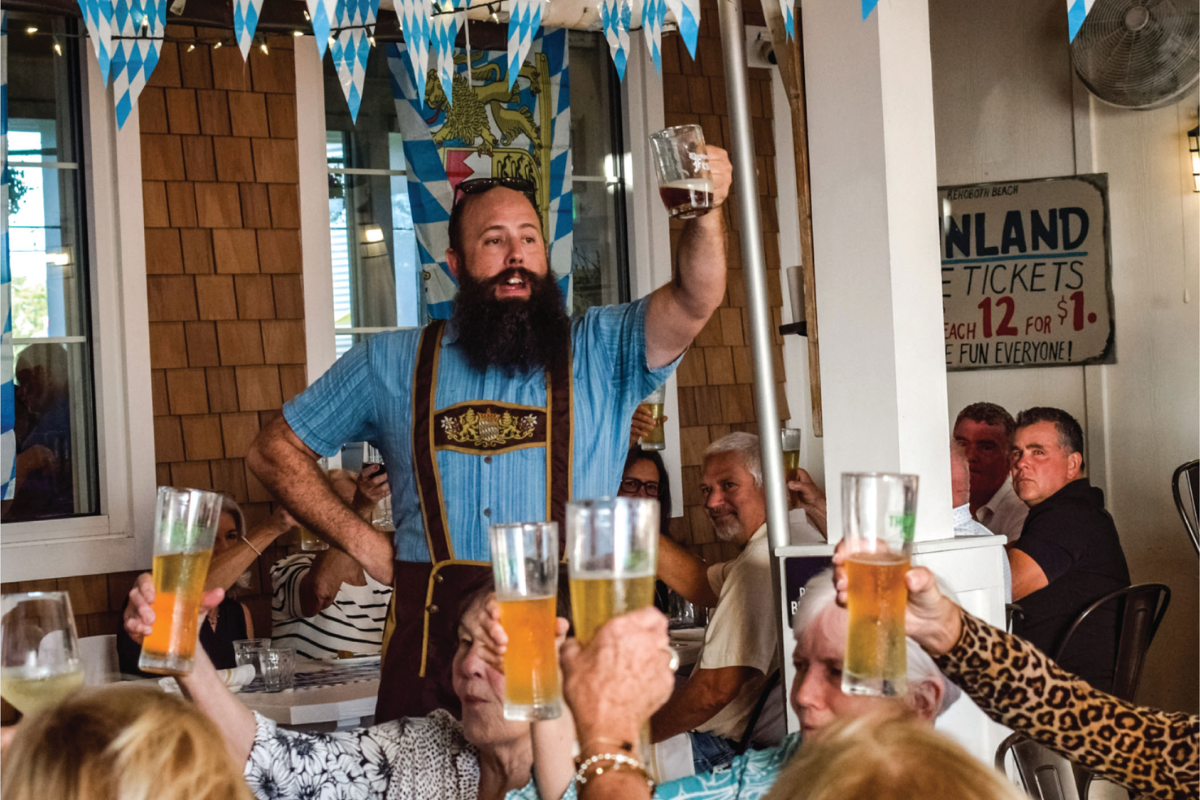
Breweries and brewpubs also host events and activities to draw crowds. “While I would love to say we are a great brewery first, over the years, we have had to become an event company that makes great beer,” says Rob Boyle, CEO and co-owner of Bellefonte Brewing Co. “Margins are too thin to just rely on the beer to bring people in and keep the lights on.”
The brewery hosts poker nights, music bingo, Quizzo (trivia), live music, and open-mic nights. There are monthly comedy shows and stand-up comedy classes. Dogfish Head’s Milton tasting room has bingo and taco specials every Wednesday night. “We are packed,” Bastian says.
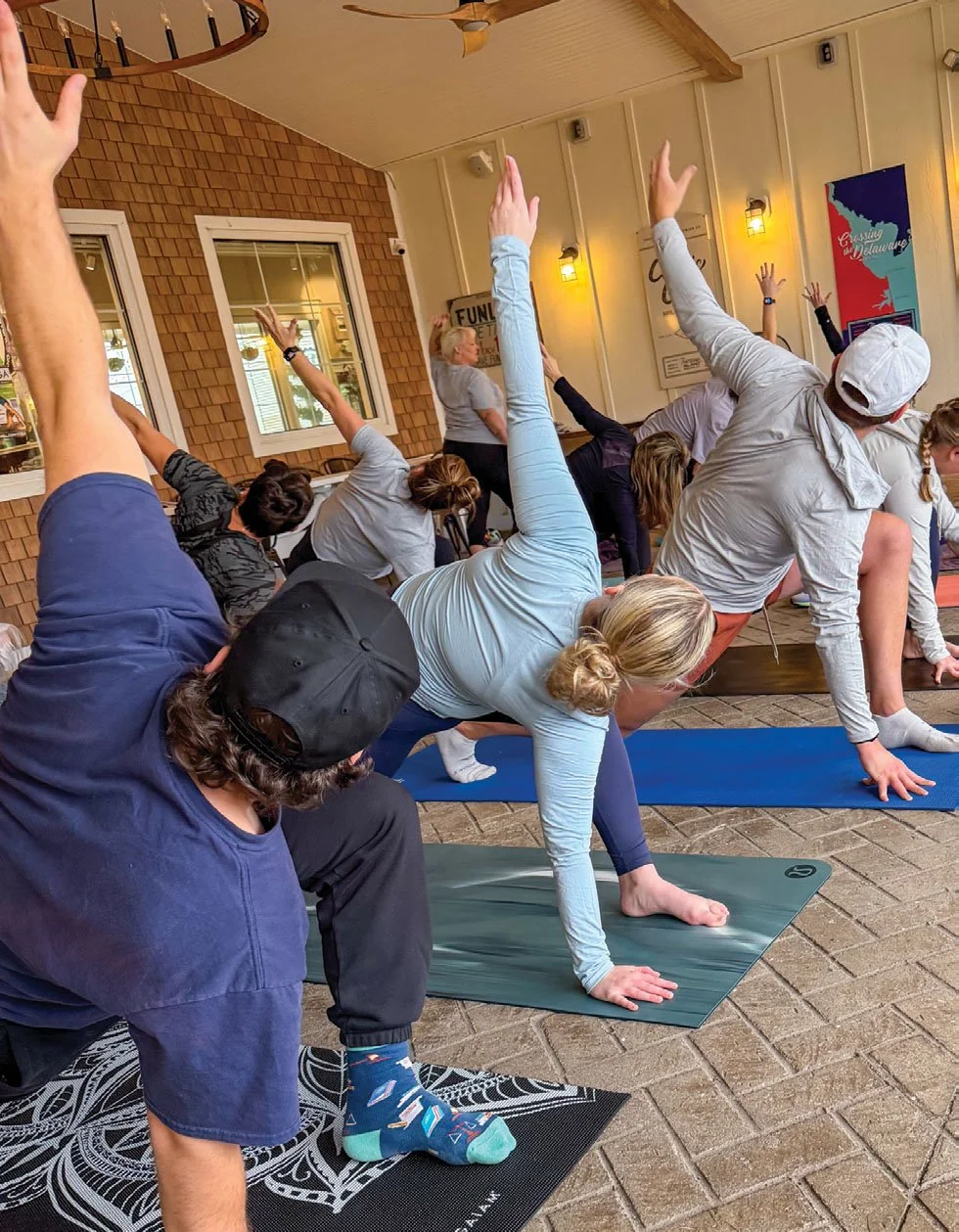
Crooked Hammock has offered yoga. WBW partners with Delaware Shakespeare and City Theater Co. The right partner is key, Fusco says. Both parties must work to attract the audience.
Live music is another popular offering. While many breweries and brewpubs stick to one or two performers, Dew Point Brewing Co. in Yorklyn hires bands with four or more players.
Providing entertainment is about more than special events. WBW’s site off Marsh Road in Brandywine Hundred is outfitted with corn hole, pool tables, and dart boards. Crooked Hammock’s brand is all about backyard living, and both Delaware locations have outdoor games and children’s play sets.
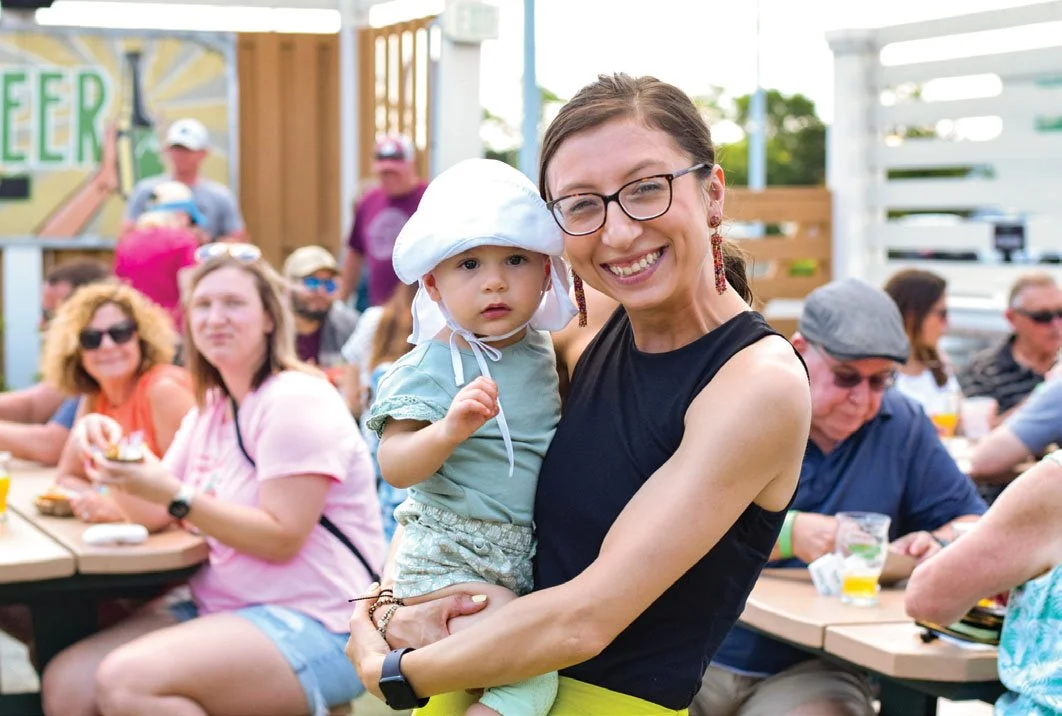
The events bring people together, and for generations, community has characterized a good brewery and public house.
“We see our role as creating an experience that complements the beer [without] replacing it, giving people a reason to choose a brewery as their go-to spot to connect, relax, and spend time together,” Schatz explains.
Adds Garrahan, “The most successful businesses will be those that prioritize authenticity, hospitality, and a strong sense of community, creating environments where the product is not just a beverage but the feeling of belonging that comes with it.”